


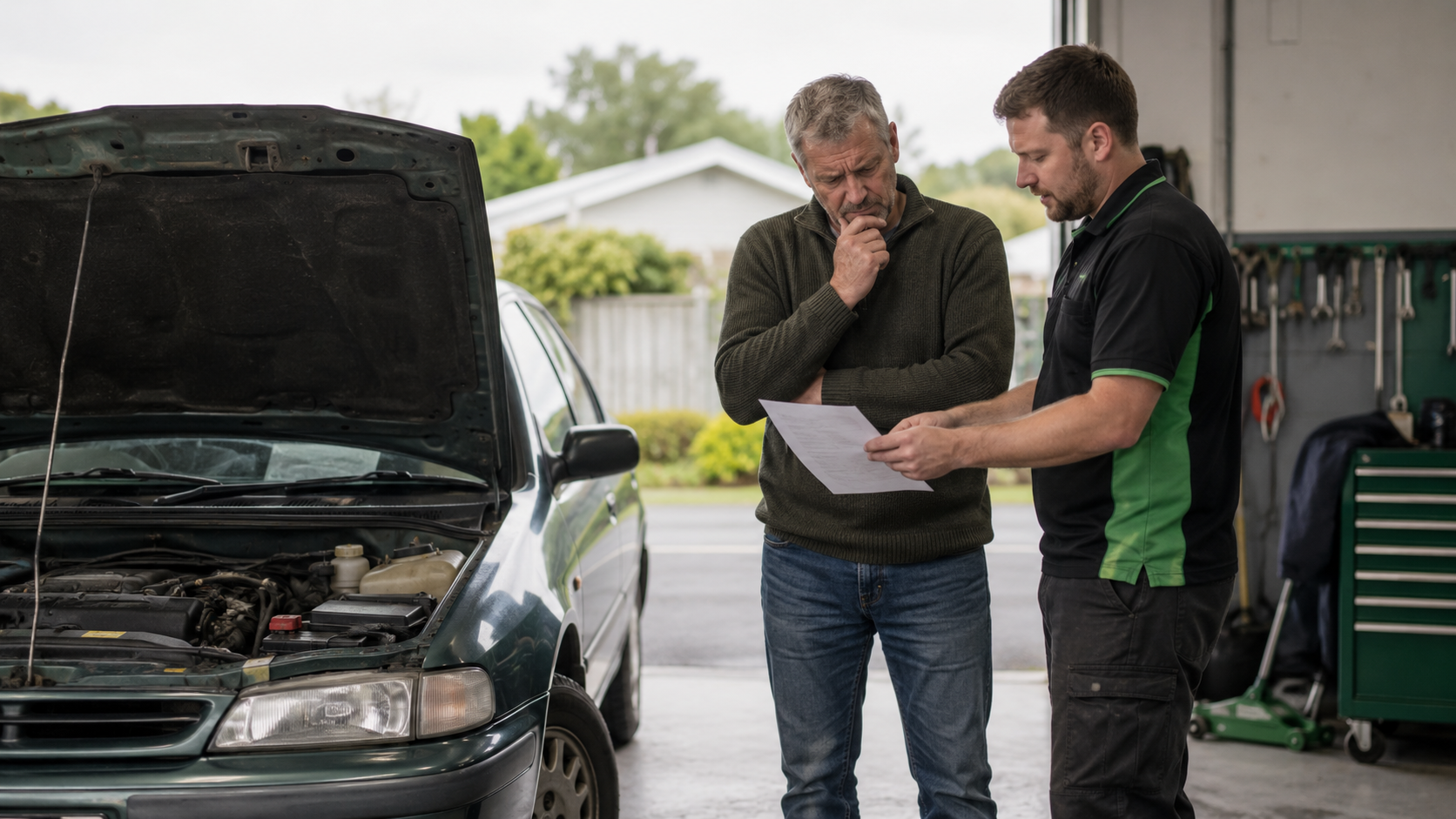
Most car owners know the feeling. You take your vehicle to the mechanic expecting a routine repair, only to receive a quote that is far higher than you anticipated. At that point, the question changes. It is no longer simply about whether the car can be fixed. You need to decide whether repairing it still makes financial and practical sense.
That decision is not always easy. An older car may have sentimental value, a familiar driving feel and years of memories attached to it. It may also be fully paid off, which makes the thought of replacing it less desirable. However, there comes a time when repeated repairs, safety concerns and ongoing stress outweigh the benefits of keeping the vehicle.
Understanding when that point has arrived can help you avoid spending more money on a car that is becoming increasingly unreliable.
Start With the Repair Cost, but Do Not Look at It Alone
The repair quote is usually the first thing people consider, but it should not be viewed in isolation.
A major repair deserves closer thought when it represents a large portion of the car’s current market value. For example, a $2,500 repair on a vehicle worth around $4,000 may be difficult to justify, especially if the car also needs tyres, suspension work or another WoF-related repair soon.
However, that does not automatically mean the repair is a bad decision. If the rest of the vehicle is in good condition, has been properly maintained and is likely to remain reliable for several more years, repairing it may still cost less than buying another car.
The real question is not simply, “Is the repair expensive?”
It is, “What will this repair give me in return?”
If the repair is likely to restore a dependable vehicle and delay replacement for several years, it may be worthwhile. If it only fixes one problem in a car with several other issues, selling may be the more sensible option.
Look at the Pattern, Not Just the Latest Problem
One major repair can be frustrating, but repeated small repairs are often a stronger sign that a vehicle is reaching the end of its practical life.
A battery replacement may be manageable. So might a worn belt, a faulty sensor, or a leaking hose. The problem begins when these issues keep appearing every few months. You may repair the cooling system, then discover an electrical fault. Soon after that, the brakes need work. Before long, the vehicle is visiting the mechanic more often than it is being driven with confidence.
Individually, each repair may seem reasonable. Together, they can become a significant expense. It is worth reviewing how much you have spent on the car over the past 12 months. Include repairs, towing, servicing, replacement parts and any extra transport costs while the vehicle was off the road.
This gives you a more realistic picture of what the car is actually costing. A vehicle with a low purchase value can become surprisingly expensive when maintenance is unpredictable.

Consider the Cost of Being Without the Car
The mechanic’s invoice is not the only cost attached to an unreliable vehicle.
When your car is unavailable, you may need to use taxis, rideshares, public transport or a borrowed vehicle. You may miss work, delay appointments or reorganise family responsibilities.
These costs are easy to overlook because they do not appear on the repair bill. Reliability also has a personal value. If you no longer trust the vehicle to complete a longer trip, carry your family safely or start each morning, the car may no longer be meeting its main purpose.
A car should give you reliable transport and peace of mind. If every warning light or strange noise makes you anxious, owning the car can feel more stressful than helpful. Not every small problem means you should sell, but ongoing worries are worth considering.
Safety Should Hold Greater Importance Than Sentiment
Many owners keep older vehicles because of emotional attachment. The car may have been part of family holidays, regular commutes and major life changes.
Those memories matter, but they should not outweigh serious safety concerns. Age alone does not make a car unsafe. A well-maintained older vehicle can still be dependable and roadworthy. The concern is its actual condition. Serious rust in structural or suspension areas, worn steering components, repeated brake problems or unresolved safety-system faults may make the vehicle increasingly difficult or costly to keep on the road. Problems with airbags, ABS, stability control or structural strength should not be ignored simply because the car still starts and drives.
When a mechanic advises that the vehicle has major safety issues, ask for a clear explanation of the required repairs, the likely cost, and whether further problems are expected. If restoring the car to a safe standard calls for extensive work, replacing or selling it may be the more responsible decision.
When an Engine or Transmission Failure Changes Everything
Some repairs have a much greater effect on the decision than others.
Engine and transmission problems are among the most expensive because they involve major components and substantial labour. A replacement or rebuild may make sense when the vehicle has strong value, is otherwise in excellent condition or has particular importance to the owner.
For an older, high-kilometre vehicle with other faults, the same repair may be difficult to justify. Before approving major work, ask the mechanic about the overall condition of the vehicle. Find out whether the repair is likely to solve the main problem or whether other expensive issues may follow.It is also worth comparing the repair cost with the price of a suitable replacement vehicle.
A costly repair may still be cheaper than replacing the car. However, spending heavily on one major component is risky when the rest of the vehicle is also worn. The decision should be based on the whole car, not only the failed part.
Parts Availability Can Become a Problem
Older and less common vehicles can become harder to repair because replacement parts may no longer be readily available. A mechanic may need to search through wreckers, order used parts or wait for items to arrive from overseas. This can increase both the cost and the time the vehicle remains off the road.
Used parts can be a practical solution, but availability may become less reliable as the model ages. The next repair could be more difficult than the last. If parts are becoming hard to source and the vehicle already needs frequent attention, continuing ownership may become increasingly inconvenient. This does not always mean the car has no value. Its remaining components may still be useful to a professional dismantler or vehicle buyer.
Compare Repairing With Replacing Properly
Replacing a car comes with its own costs, so it is important not to assume that buying another vehicle is automatically the cheaper option. A replacement may involve a purchase price, finance repayments, insurance, registration, servicing and depreciation.
Even a newer vehicle can require repairs. However, it may also offer greater reliability, lower fuel use, updated safety features and more predictable maintenance. When comparing the two options, think beyond the immediate repair quote. Consider how much you are likely to spend on the current car over the next one or two years. Then compare that with the total cost of buying and running a suitable replacement.
The answer may not be obvious. Keeping a paid-off vehicle can be financially sensible when it remains safe and reliable. Replacing it may make more sense when breakdowns are frequent and the repair outlook is poor.
Your Lifestyle May Have Outgrown the Vehicle
Sometimes the car is still mechanically usable, but it no longer suits your needs.
A small two-door car may become impractical after starting a family. An older large vehicle may use more fuel than you can comfortably justify after your commute changes. You may also need more storage, better accessibility or improved safety features.
In these cases, the decision is not only about repair costs. It is about whether the vehicle still fits your daily life. Spending more money on repairs may not be worthwhile when you are already planning to replace the car for practical reasons. Selling it before another major fault appears may allow you to recover more value and move towards something more suitable.
When Selling in Its Current Condition Makes Sense
You do not always need to repair the car before selling it.
A private buyer may expect a current WoF, presentable condition and confidence that the vehicle can be driven away. This can make damaged, deregistered or non-running cars difficult to sell privately. A professional vehicle buyer may assess the car differently.
The make, model, age, condition, completeness and value of reusable parts can all contribute to an offer. Bay Cash for Cars considers old, damaged, high-kilometre and non-running vehicles in Napier and Hastings. Selling the car in its current condition may be worth considering if the repairs are too expensive, the vehicle is no longer roadworthy, or you do not want to invest more time and money in it.
Provide honest details about the car’s condition and include clear photos where possible. This helps the buyer understand what is being offered and provide a more reliable quote. You can then compare the offer with the repair estimate before making a final decision.
Make the Decision Based on Facts, Not Frustration
It is easy to make a rushed decision after receiving a large repair quote. Before agreeing to the work or deciding to sell, take a little time to review the situation properly.
Ask the mechanic which repairs are urgent, which can wait and whether other major problems are likely in the near future. Check the vehicle’s realistic current value rather than relying on the highest prices advertised. Those advertised vehicles may be in better condition, have lower kilometres or include a current WoF. Then consider the less obvious costs: time off the road, alternative transport, stress and the risk of another breakdown. A second mechanical opinion can also be useful when the repair is expensive.
Is It Time to Let the Car Go?
There is no single formula that works for every vehicle. A repair may be worthwhile when the car is otherwise sound, suits your needs and can provide several more years of reliable use. Selling may be the better choice when repair costs are becoming frequent, the vehicle has serious safety issues, or you no longer trust it to perform reliably. The right decision is the one that makes sense financially, practically and personally.
Letting go of an old car can be difficult, especially when it has served you well for many years. But a vehicle is ultimately there to provide safe and dependable transport. When it becomes a continuing source of expense, inconvenience and uncertainty, selling it may be the most sensible next step.
Bay Cash for Cars offers car removal services in Napier and Hastings. Request an obligation-free quote, compare it with the likely repair cost and decide which option provides better value for your situation.