


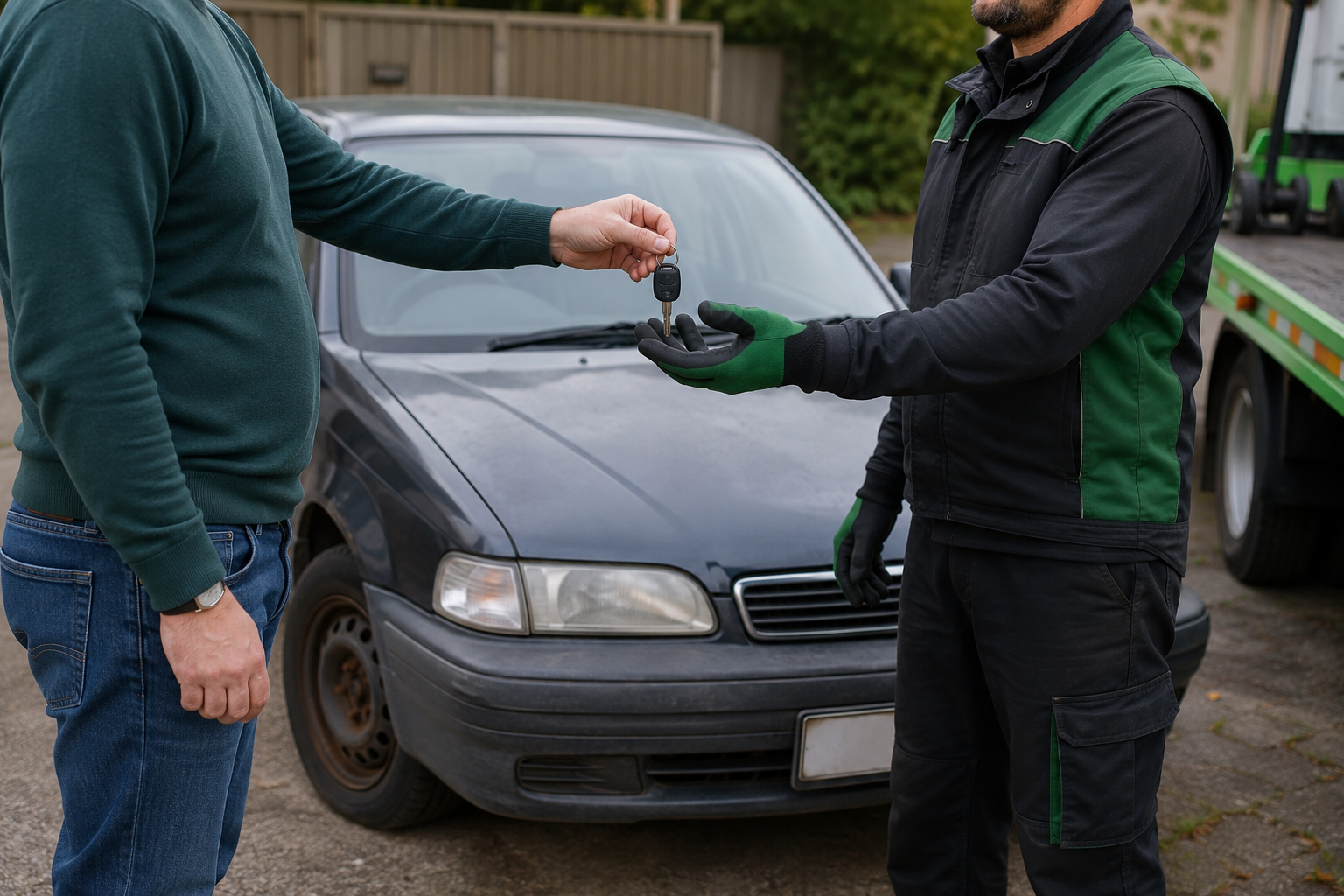
Selling a car privately can look simple at first. You take a few photos, write an advertisement, choose a price and wait for someone to get in touch.
For newer vehicles in good condition, that approach can work well. However, the process is often more difficult when the car is old, damaged, unregistered, high in kilometres or no longer roadworthy. Many Napier owners discover that the time, repair costs and uncertainty involved in a private sale are not always worth the final result. In these situations, selling to a professional car buyer can be a more practical option.
That does not mean private selling is always a bad choice. It simply means the best method depends on the vehicle, its condition and how much time and effort the owner is prepared to invest.
Why Older Cars Are Harder to Sell Privately
Private buyers usually want confidence. They want to know that the car is reliable, safe to drive and unlikely to create major repair bills soon after purchase.
An older vehicle may raise more questions. Buyers may be concerned about engine wear, transmission problems, rust, electrical faults, accident history or the cost of the next WoF inspection.
Even small problems can become points of negotiation. A warning light, worn tyres, faded paint, or an unusual engine noise may lead buyers to significantly reduce their offer. This can be frustrating for sellers who believe the vehicle still has useful life left. However, buyers naturally compare the car with other options available in the local market. If another vehicle has a current WoF, fewer visible issues or a better service history, it may attract attention first.
The result is that an older car can remain listed for weeks while the seller continues to answer messages, arrange inspections and adjust the price.
Private Enquiries Do Not Always Lead to a Sale
One of the most tiring parts of private selling is dealing with enquiries that go nowhere.
A listing may receive plenty of messages, but many people simply ask whether the car is still available and then disappear. Others may make a very low offer before seeing the vehicle, while some arrange a viewing and fail to arrive.
This can become especially frustrating when you need to reorganise your day around inspections or test drives. Older cars often attract buyers looking for a bargain. There is nothing wrong with negotiating, but repeated low offers can make the process feel endless. Sellers may also find themselves explaining the same faults, repair history and WoF status to several different people.
If you have time and patience, this may still be manageable. However, when you want the vehicle gone quickly, a long series of uncertain enquiries can make a private sale less appealing.
Repairing the Car Before Sale May Not Be Worthwhile
A current WoF can make a vehicle easier to sell privately because it gives buyers more confidence that the car has recently met basic road-safety requirements.
The difficulty is that an older vehicle may need costly work before it can pass. The car might require tyre, brake, or suspension repairs, lighting work, or rust treatment. Mechanical problems may also need attention before a buyer feels comfortable completing the purchase.
At that point, the seller has to make a financial decision. Will the repairs increase the sale price enough to justify the cost?
In some cases, spending money on repairs can help. A modest repair that improves the car’s usability may lead to a quicker sale and a stronger offer.
In other cases, the cost of getting the car roadworthy may represent a large portion of its total value. Spending heavily on an old vehicle does not always mean you will recover that money when it sells.
A car can still be sold without a current WoF, but the situation must be clearly disclosed. The buyer needs to understand the vehicle’s condition and accept the responsibility involved. A car without a current WoF also cannot simply be driven as normal, which reduces the pool of interested buyers. For many owners, selling the vehicle in its current condition is more practical than paying for repairs first.
Test Drives and Home Viewings Can Feel Uncomfortable
Private selling usually involves inviting strangers to your home or meeting them at another location.
Most buyers are genuine, but it is still reasonable to feel cautious. A seller may need to manage test drives, protect personal information and ensure the vehicle is not taken without proper supervision. There is also the question of insurance. Before allowing anyone to test-drive the car, the seller should understand whether their policy covers another driver.
Payment can create another concern. Cash, bank transfers and deposits all need to be handled carefully. Sellers should confirm that funds have cleared before handing over the keys and vehicle. These steps are part of a normal private transaction, but they add responsibility. For someone who has never sold a car privately, the process may feel more complicated than expected.
Disputes Can Still Arise After a Private Sale
Private sales do not offer buyers the same protections that apply when purchasing from a registered motor vehicle trader. However, that does not mean the seller can ignore known problems or make misleading claims.
The vehicle should be described honestly. If the seller knows about a major fault, accident history or mechanical issue, it is better to disclose it clearly. Statements such as “perfect condition,” “nothing wrong with it” or “will pass a WoF easily” should only be used when they can be supported. Even when the seller has acted honestly, a buyer may still contact them if a problem appears shortly after the sale. The seller may not be legally responsible for every unexpected fault, but the disagreement can still be stressful.
Clear written communication helps. The advertisement, messages and sale agreement should reflect the vehicle’s true condition. This reduces the chance of misunderstanding later.
When a Professional Car Buyer Makes More Sense
A professional car buyer can be a useful alternative when the vehicle is difficult to sell through the usual private market.
This may include cars that are damaged, deregistered, no longer running or too expensive to repair. High-kilometre vehicles, old work utes and unfinished projects may also be better suited to this type of sale.
The main benefit is convenience. Instead of preparing the car for advertising and dealing with multiple buyers, the owner provides the vehicle details directly to one company.
The buyer can assess the make, model, age, condition and completeness of the vehicle before making an offer. If the owner accepts, collection can then be arranged.
This approach may not always produce the same amount that a patient private seller could achieve with the perfect buyer. However, it can reduce the time, uncertainty and work involved.
For many people, a straightforward sale is worth more than spending weeks trying to secure a slightly higher price.
You May Not Need to Repair or Clean the Vehicle
Private buyers often expect a car to be presentable. Sellers may feel pressure to clean the interior, polish the body, repair cosmetic damage and complete maintenance before arranging viewings.
A professional car buyer is usually assessing the vehicle for different reasons. Reusable parts, mechanical components, body panels and recyclable materials may all contribute to its value.
This means a vehicle may still be considered even when it has dents, rust, a failed engine or a damaged interior.
There is no benefit in hiding faults. Accurate details and clear photos help the buyer understand what is being offered and provide a more reliable quote.
The owner should explain whether the vehicle starts, drives, has missing parts or has suffered accident damage. This creates a smoother process when the vehicle is inspected or collected.
Vehicle Collection Solves the Towing Problem
A non-running car can be particularly difficult to sell privately because it cannot be taken to a buyer.
Some buyers may be interested but unwilling to organise towing. Others may reduce their offer after considering the cost of moving the vehicle. Paying for a separate tow can also reduce what the seller receives from the sale.

A car removal service addresses this problem by collecting the vehicle from its location. This is helpful when the car is parked at home, stored on a property or unable to be legally driven.
Bay Cash for Cars provides vehicle removal services in Napier, Hastings and surrounding areas. Owners should confirm the collection arrangements and whether removal is included during the offer discussion.
This can make the sale far easier for someone with a vehicle that has not moved for months or even years.
The Ownership Change Still Needs to Be Completed Properly
Selling through a professional buyer may simplify the transaction, but the ownership change still needs to be completed correctly.
The seller should have suitable identification and proof that they are entitled to sell the vehicle. Any personal items should be removed before collection, including belongings in the glove box, boot, door pockets and under the seats.
The seller should also notify NZTA once the vehicle has been sold. This is an important step because it records that the seller is no longer the person responsible for the vehicle.
It is best to complete the notification immediately rather than assuming that the buyer will handle everything.
Clear paperwork protects both sides and helps prevent future problems involving fees, tolls or infringements.
Private Sale or Car Removal: Which Is Better?
A private sale may be the better choice when the car is in good condition, has a current WoF and is likely to attract ordinary buyers. Sellers who have time to advertise, answer questions and arrange inspections may also achieve a stronger price.
A professional car buyer may be more suitable when the vehicle is old, damaged or difficult to move. It can also make sense when repair costs are high or the seller simply wants a faster and more predictable process.
The right decision depends on what matters most.
Some owners are willing to wait for the highest possible private offer. Others place greater value on speed, convenience and having the vehicle removed without further work.
Before deciding, compare the likely private-sale value with the cost of repairs, advertising, towing and your own time. This gives you a more realistic picture than looking only at the asking price.
Sell Your Old Car in Napier Without the Usual Hassle
Selling an older vehicle privately is possible, but it does not always go smoothly.
Unreliable enquiries, repair costs, test drives and long waiting periods can make the process tiring. When the car is no longer roadworthy or cannot be driven, the practical challenges become even greater.
Bay Cash for Cars offers an alternative for owners in Napier, Hastings and nearby areas. The company considers vehicles in a range of conditions, including old, damaged, deregistered and non-running cars.
To request an offer, provide honest details about the vehicle and include clear photos where possible. You can then review the quote and decide whether it suits your needs.
A private sale may still be worthwhile for some vehicles. However, when your old car is taking up space, costing money or becoming harder to sell, a professional removal service may provide the simpler way forward.
Instead of dealing with the frustration of private listings, join the hundreds of Napier residents who choose the simple, certain, and stress-free route. Clear your driveway, get paid on the spot, and let the professionals handle the heavy lifting.
Ready to see what your old car is worth? Contact Bay Cash for Cars today for a no-obligation quote and experience the easiest way to sell a car in Napier.